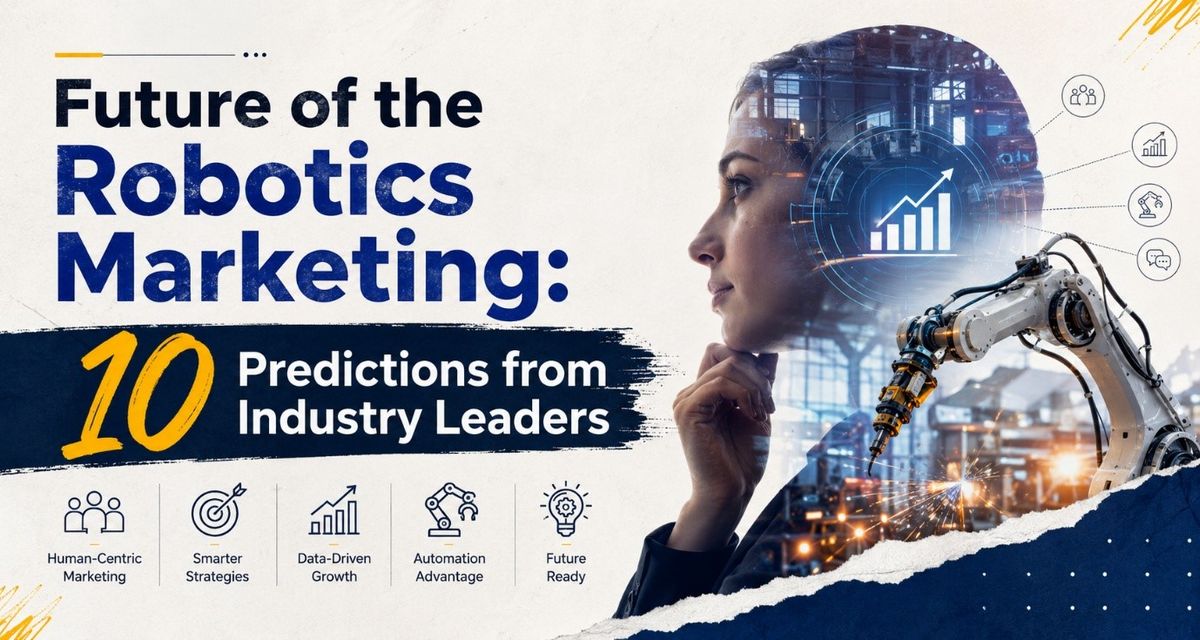
The robotics industry is entering a new era of growth. From warehouse automation and AI-powered systems to industrial robotics and autonomous technologies, businesses across industries are rapidly adopting automation to improve efficiency and scalability.
But while robotics technology is evolving quickly, marketing strategies in the industry are changing just as fast.
Traditional technical messaging focused only on specifications and engineering capabilities is no longer enough. Modern buyers want clarity, trust, education, and real business outcomes. The future of robotics marketing will belong to companies that can simplify complex technology while building authority in a highly competitive market.
Here are 10 predictions shaping the future of robotics marketing in 2026 and beyond.
1. Human-Centric Messaging Will Become Essential
Earlier, robotics companies focused heavily on technical specifications like speed, payload capacity, and system performance.
Now, buyers care more about:
- operational efficiency,
- workforce productivity,
- scalability,
- and long-term business impact.
Future marketing campaigns will focus less on “what the robot does” and more on “how the business improves after automation.”
This shift is already transforming the global robotics market.
2. AI Will Redefine Personalized Marketing
AI-driven personalization will become one of the biggest trends in robotics marketing.
Companies will increasingly use AI to:
- personalize website experiences,
- automate lead nurturing,
- analyze buyer intent,
- and deliver industry-specific campaigns.
A manufacturing buyer and a healthcare robotics buyer will expect completely different messaging journeys. Personalized communication will improve engagement, conversions, and customer trust.
3. Educational Content Will Drive More Leads
Modern buyers spend significant time researching before investing in automation solutions.
Because of this, robotics companies will invest heavily in:
- blogs,
- whitepapers,
- webinars,
- podcasts,
- and industry insights.
Brands that educate the market consistently will become trusted authorities in the growing future of the robotics industry.
Educational content will also play a major role in improving SEO visibility and long-term organic traffic.
4. Video Marketing Will Dominate Robotics Branding
Robotics is highly visual by nature.
Buyers want to see:
- warehouse automation systems,
- robotic workflows,
- AI-powered operations,
- and real implementation environments.
This is why video content will dominate the future of warehouse automation marketing.
Companies will increasingly use:
- product demos,
- short-form videos,
- factory walkthroughs,
- customer success stories,
- and motion graphics,
See how robotics brands are building credibility and market visibility through focused digital marketing execution.
to showcase real-world impact.
Video will become one of the strongest trust-building tools for robotics brands.
Explore how all4Ps helps B2B technology brands strengthen their marketing and generate measurable business outcomes through real client work.
5. Industry-Specific Marketing Will Increase
Generic messaging is becoming less effective in the robotics industry.
Future campaigns will become highly vertical-focused, targeting industries such as:
- logistics,
- manufacturing,
- healthcare,
- automotive,
- and retail.
Instead of saying:
“We improve automation efficiency.”
brands will communicate:
“We reduce warehouse picking errors for e-commerce fulfillment centers.”
Specific messaging improves both lead quality and SEO performance.
6. SEO Will Become a Major Growth Channel
Search engines are becoming one of the most important discovery platforms for robotics buyers.
Businesses are actively searching for:
- automation trends,
- robotics adoption,
- AI integration,
- and industrial innovation.
This creates massive opportunities for companies investing in SEO-focused content around:
- future of robotics technology
- robotics industry trends,
- industrial automation,
- and AI-driven operations.
Companies that build strong organic visibility early will gain long-term competitive advantages.
7. Brand Trust Will Matter More Than Ever
As the robotics industry grows, competition will increase significantly.
Buyers will compare not only technology but also:
- customer support,
- implementation expertise,
- reliability,
- and long-term scalability.
Strong branding and clear communication will become major differentiators in the robotics marketing landscape.
Companies that build trust consistently will stand out in a crowded market.
8. Community Building Will Become a Key Strategy
The future of robotics marketing will move beyond direct selling.
Leading brands will focus on building:
- innovation communities,
- developer ecosystems,
- industry forums,
- and educational partnerships.
Community-driven engagement helps robotics companies build authority while creating stronger long-term customer relationships.
This strategy will become increasingly important in the evolving robotics market.
9. Sustainability Messaging Will Grow Stronger
Sustainability is becoming a major focus across industries.
Future robotics campaigns will increasingly highlight:
- energy efficiency,
- reduced waste,
- predictive maintenance,
- and optimized logistics.
Businesses are looking for automation systems that improve both operational performance and environmental sustainability.
This trend will heavily influence the future of robotics technology in the coming years.
10. Simpler Communication Will Win
One of the biggest challenges in deep-tech industries is overly technical communication.
Many robotics companies still use complex engineering language that buyers struggle to understand.
But future buyers want clarity.
The brands that explain advanced technologies in a simple, business-focused way will lead the next phase of growth.
The future of robotics marketing is not about making innovation sound complicated.
It is about making complex technology easy to understand.
FAQs
1. What is robotics marketing?
Robotics marketing refers to the strategies robotics and automation companies use to promote their technologies, products, and solutions to businesses and consumers.
2. Why is SEO important for robotics companies?
SEO helps robotics companies appear in search results when businesses research automation solutions, industrial robotics, and AI-driven technologies online.
3. How is AI changing robotics marketing?
AI improves personalization, automates lead nurturing, analyzes customer behavior, and helps robotics companies create more targeted campaigns.
4. What are the top robotics marketing trends for 2026?
Major trends include:
- AI-driven personalization
- Video-first marketing
- Industry-specific campaigns
- SEO-focused content
- Sustainability messaging
- Community-led branding
5. Why is video important in robotics marketing?
Video helps businesses visualize robotic systems in action, making it easier to understand workflows, automation processes, and operational benefits.
Final Thoughts
The future of robotics is not just about smarter machines.
It is also about smarter communication.
As automation adoption accelerates globally, robotics companies must move beyond technical messaging and focus on:
- education,
- storytelling,
- personalization,
- and trust-building.
The future of robotics marketing will belong to brands that combine innovation with clear, human-centered communication.
For robotics and automation companies, the opportunity ahead is massive. But the companies that market their value effectively will lead the next generation of industrial transformation.
Looking to strengthen your robotics marketing strategy? Get in touch with all4Ps to discuss your business goals.


